


Wondering if you might be pregnant? Early pregnancy can bring several physical and emotional changes. Some people notice symptoms within the first few weeks, while others may not experience noticeable symptoms until later. Every pregnancy is different, and symptoms can vary from person to person.
Some early pregnancy symptoms may also be caused by stress, hormonal changes, illness, or other health conditions. Therefore, symptoms alone cannot confirm pregnancy. The most reliable way to find out is to take a pregnancy test and, when appropriate, speak with a healthcare professional.
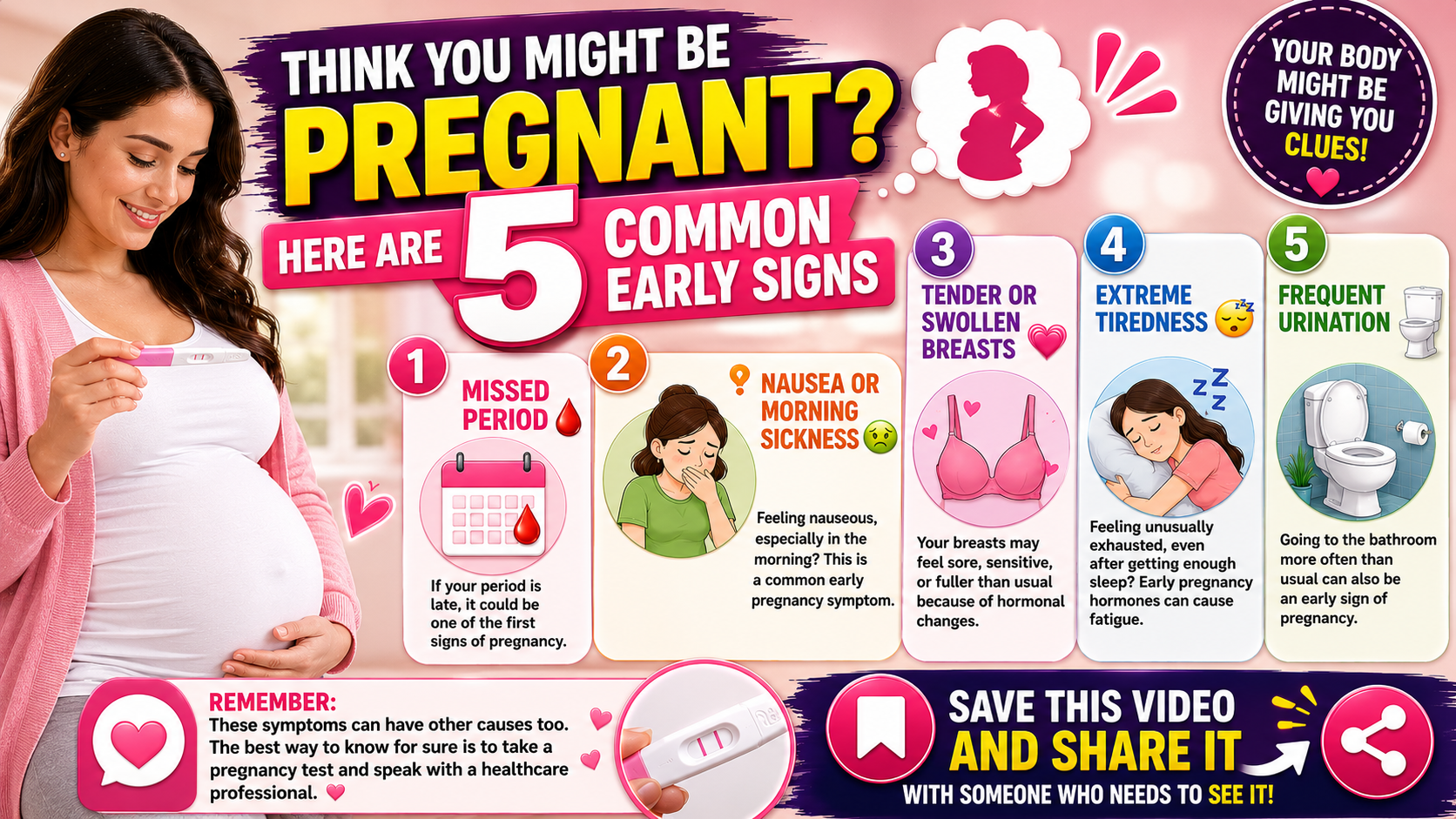
Here are five common early signs that may indicate pregnancy.
1. A Missed or Late Period
One of the most well-known early signs of pregnancy is a missed period.
If you usually have a regular menstrual cycle and your period does not arrive when expected, pregnancy may be one possible explanation. After conception, pregnancy hormones help maintain the uterine lining, which can prevent the usual menstrual bleeding.
However, a late period does not always mean that you are pregnant. Stress, significant changes in weight, intense exercise, illness, hormonal changes, and some medical conditions can also affect your menstrual cycle.
If your period is late and pregnancy is possible, taking a home pregnancy test can help provide more information.
2. Nausea or Morning Sickness
Nausea is another common early pregnancy symptom. Despite being called “morning sickness,” nausea can happen at any time of day.
Some people experience mild queasiness, while others may also experience vomiting. Pregnancy-related nausea is often associated with hormonal changes that occur during early pregnancy.
Certain smells, foods, or even previously enjoyable meals may suddenly become unpleasant. Some people may also experience changes in appetite or food preferences.
If nausea becomes severe or you are unable to keep fluids down, it is important to seek medical advice because excessive vomiting can lead to dehydration.
3. Tender or Swollen Breasts
Hormonal changes during early pregnancy can cause changes in the breasts.
You may notice that your breasts feel:
- Sore
- Tender
- Fuller
- Heavier
- More sensitive than usual
The nipples and the area around them may also become more sensitive. These changes can happen because the body is beginning to prepare for the changes associated with pregnancy and breastfeeding.
However, breast tenderness can also occur before a menstrual period because of normal hormonal fluctuations. This is why breast changes alone cannot confirm pregnancy.
4. Extreme Tiredness
Feeling unusually tired is another common symptom that some people experience during early pregnancy.
You may feel exhausted even after getting what seems like enough sleep. Everyday activities that normally feel easy may suddenly require more energy.
Hormonal changes, including increased levels of progesterone, can contribute to feelings of tiredness. The body is also undergoing significant changes during early pregnancy, which may affect energy levels.
Getting enough rest, eating a balanced diet, drinking enough fluids, and listening to your body can be helpful. If extreme fatigue is persistent or concerning, speaking with a healthcare professional can help identify the cause.
5. Frequent Urination
Needing to urinate more often than usual can also occur during early pregnancy.
Hormonal changes can increase blood flow to the kidneys, which may lead to increased urine production. As pregnancy progresses, physical changes in the body can also contribute to increased pressure on the bladder.
If you suddenly find yourself making more trips to the bathroom, especially along with other possible pregnancy symptoms, pregnancy may be one possible explanation.
However, frequent urination can also be caused by increased fluid intake, certain medications, urinary tract problems, and other conditions.
Other Possible Early Pregnancy Symptoms
In addition to the five symptoms mentioned above, some people may experience other changes during early pregnancy, including:
- Increased sensitivity to certain smells
- Food cravings or food aversions
- Mild cramping
- Light spotting
- Mood changes
- Bloating
- Headaches
- Constipation
Not everyone experiences these symptoms, and having one or more of them does not necessarily mean that you are pregnant.
When Should You Take a Pregnancy Test?
If you think you may be pregnant, a home pregnancy test can help determine whether pregnancy is possible.
Many pregnancy tests are designed to detect human chorionic gonadotropin, commonly known as hCG. This hormone is produced during pregnancy and generally increases as pregnancy progresses.
Testing too early may sometimes make it harder to detect pregnancy. Following the instructions provided with the specific test is important.
If a pregnancy test is negative but your period remains late or you continue to experience symptoms, consider speaking with a healthcare professional about whether you should test again or explore other possible causes.
Can You Be Pregnant Without Symptoms?
Yes. Some people experience several early pregnancy symptoms, while others experience very few or none at all.
The absence of symptoms does not necessarily mean that someone is not pregnant. Similarly, having symptoms does not confirm pregnancy because many early pregnancy symptoms can overlap with symptoms of premenstrual syndrome, stress, illness, or other health conditions.
A pregnancy test is a more reliable way to check for pregnancy.
When Should You Seek Medical Advice?
Seek prompt medical advice if you are concerned about your symptoms or experience unusual or severe symptoms.
Particularly concerning symptoms can include severe abdominal pain, heavy bleeding, fainting, or severe vomiting that makes it difficult to keep fluids down.
A healthcare professional can provide advice based on your individual symptoms, health history, and circumstances.
Final Thoughts
A missed period, nausea, breast tenderness, extreme tiredness, and frequent urination are five common symptoms that may occur during early pregnancy. However, pregnancy symptoms can vary widely, and these signs can also have other causes.
If you think you might be pregnant, the best next step is to take a pregnancy test according to the instructions and speak with a healthcare professional when appropriate.
Remember: symptoms can suggest pregnancy, but a pregnancy test is the best way to check.