
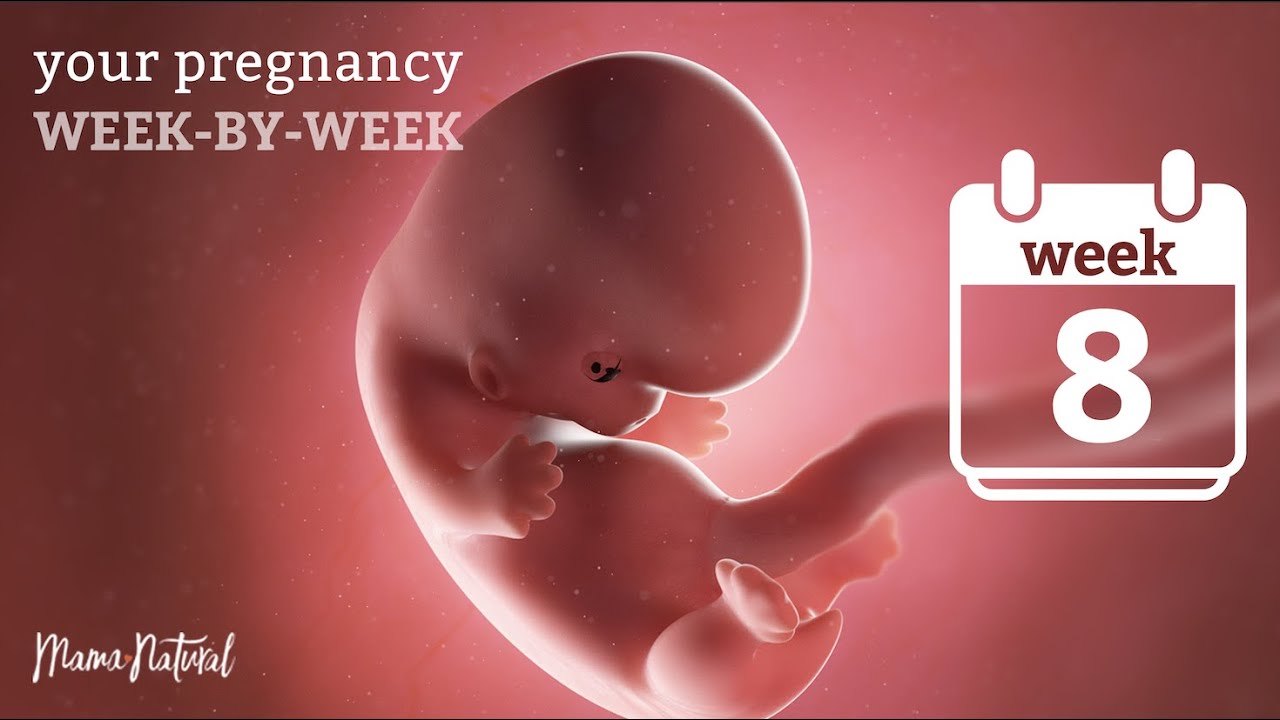
Pregnancy week 8 is a period of rapid development. Although your abdomen may not look much different yet, important changes are happening inside your body and your developing baby is beginning to take a more recognizable form. Around this stage, early facial features, limbs, fingers, and other structures continue developing, while pregnancy hormones can bring noticeable changes to your breasts and digestive system.
How Your Baby Is Developing in Week 8
By around the eighth week of pregnancy, the embryo is approximately the size of a small bean, although exact measurements can vary. The developing face is becoming more defined as the eyes, nose, and ears continue to take shape. The temporary tail-like structure seen during earlier development is also becoming much less prominent as the body changes.
The arms and legs are developing quickly during this period. Elbows begin to form, the fingers start separating from their earlier webbed appearance, and the legs continue lengthening. Many of the body’s basic structures are already underway, but they are still immature and will continue developing throughout pregnancy. The reproductive organs are also beginning to develop, although they are generally not something that can be reliably identified through an ultrasound this early.
Breast Changes During Early Pregnancy
One of the noticeable physical changes during early pregnancy can happen in the breasts. Hormonal changes prepare breast tissue for future milk production, which can cause the breasts to become larger, heavier, tender, or more sensitive. Some people notice these changes before they have any visible pregnancy bump.
The areolas may become darker, and small raised glands called Montgomery glands can become more noticeable around the nipples. These glands produce substances that help keep the nipple and areola area protected and moisturized. Increased blood flow can also make veins on the breasts more visible, particularly as breast tissue grows.
Breast changes vary greatly from person to person. Some pregnant people experience significant tenderness and enlargement, while others notice only subtle differences. Changes in the areola may also continue throughout pregnancy and are part of the body’s preparation for breastfeeding.
Understanding Morning Sickness
Nausea during pregnancy is often called morning sickness, but the name can be misleading because nausea and vomiting can happen at any time of day. Some people experience symptoms mainly in the morning, while others may feel sick throughout the day or more strongly in the evening.
Pregnancy-related nausea is common during early pregnancy and is thought to be associated with hormonal changes. Symptoms can range from mild queasiness to frequent vomiting. For many people, nausea becomes less intense as pregnancy progresses, although the timing varies considerably.
Small, frequent meals may be easier to tolerate than large meals. Keeping simple foods available, avoiding personal food triggers, getting enough rest, and drinking fluids regularly can also help some people manage symptoms. Foods that are easier to digest may be useful when nausea is strong.
Vitamin B6 is sometimes used to help manage pregnancy nausea, but supplements should be discussed with a healthcare professional before use. The appropriate dose depends on individual circumstances, and taking more than recommended is not necessarily better. If nausea or vomiting makes it difficult to keep fluids down, causes signs of dehydration, or interferes substantially with daily activities, medical advice is important.
Staying Hydrated and Nourished
During early pregnancy, maintaining regular nutrition and hydration can become challenging when nausea affects appetite. Instead of focusing on large meals, try to maintain a balanced pattern of eating whenever possible. Foods containing protein, whole grains, fruits, vegetables, and healthy fats can contribute to overall nutritional needs.
Prenatal vitamins can also help provide important nutrients during pregnancy. Folic acid is particularly important during the early stages of fetal development. If nausea makes prenatal vitamins difficult to tolerate, a healthcare professional can suggest appropriate alternatives or timing.
Hydration needs vary from person to person. Drinking regularly throughout the day and paying attention to signs such as dark urine or unusual thirst can help you recognize when you may need more fluids.
Making Your Home Pregnancy Friendly
Week 8 is also a useful time to review your everyday environment. Cleaning products should always be used according to their labels, with good ventilation and appropriate precautions. Avoid mixing household chemicals, particularly products containing bleach or ammonia, because dangerous fumes can be produced.
Pregnancy does not mean every household cleaning product must automatically be eliminated, but reducing unnecessary exposure to strong fumes and using products correctly is a sensible precaution. If you are uncertain about a particular chemical or occupational exposure, ask your healthcare professional for specific guidance.
If you live with a cat, it is generally recommended that someone else clean the litter box during pregnancy when possible. Cat feces can carry the parasite that causes toxoplasmosis. If you must handle litter yourself, wearing disposable gloves and washing your hands thoroughly afterward can reduce risk. Keeping cats indoors and avoiding feeding them raw meat can also help lower exposure.
When to Seek Medical Advice
Most early pregnancy symptoms are manageable, but some symptoms require prompt medical attention. Heavy vaginal bleeding, severe abdominal or pelvic pain, severe dizziness or fainting, persistent vomiting with dehydration, or other concerning symptoms should not simply be assumed to be normal pregnancy discomfort.
If you have questions about medications, supplements, workplace exposures, severe nausea, or any symptom that worries you, contacting your doctor, midwife, or other qualified maternity professional is the safest approach.
Pregnancy week 8 is filled with changes that may not always be visible from the outside. Your baby’s developing features and limbs are becoming more defined, while your own body is adapting to the hormonal and physical demands of pregnancy. Taking care of nutrition, hydration, environmental safety, and regular prenatal care can help you navigate this important stage with greater confidence.
