
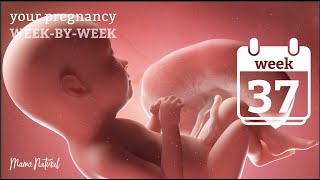
At 37 weeks pregnant, you’re getting very close to meeting your baby. Your little one is continuing to gain weight, your body is preparing for labor, and you may be thinking more seriously about what you want your birth experience to look like.
Baby at 37 Weeks
Your baby is now around 20 inches long and may weigh approximately 6½ pounds, although healthy babies come in a wide range of sizes. Your baby is still putting on weight and developing important reserves of body fat that will help with temperature regulation after birth.
Although 37 weeks is considered early term, pregnancy generally continues to 39 weeks or beyond when there is no medical reason for an earlier delivery. Those final weeks can provide valuable time for continued development, so don’t feel pressured to rush labor simply because you’re getting close to your due date.
If labor does begin at 37 weeks, however, many babies do well with appropriate newborn care.
How Are You Feeling?
By this point, your weight gain may begin to slow down. You may also notice increasing pelvic pressure, more frequent trips to the bathroom, difficulty sleeping, back discomfort, or changes in your appetite.
Every pregnancy is different, so try not to compare your weight gain or symptoms too closely with someone else’s experience. Your healthcare provider can help you understand whether your pregnancy is progressing normally.
Staying adequately hydrated is also important, particularly during the final weeks. Follow your doctor’s or midwife’s advice about your individual fluid needs.
Understanding Labor Interventions
As your due date approaches, you may be thinking about how to have the birth experience you want. If you’d prefer to avoid unnecessary interventions, one of the most useful things you can do is learn about your options before labor begins.
Induction, continuous monitoring, pain medication, assisted delivery and cesarean birth can all have an important place in maternity care when medically indicated. The goal isn’t to avoid every intervention at all costs—it’s to understand why something is being recommended and make informed decisions with your healthcare team.
If your provider suggests an induction, for example, ask why it is being recommended, what the benefits and risks are, whether there are alternatives, and how urgent the situation is.
And remember: needing an intervention does not mean you have failed. Sometimes the safest birth is different from the birth you originally imagined.
Your Week 37 To-Do List
With the finish line approaching, consider:
- Keep up with your prenatal appointments.
- Stay hydrated and eat nourishing meals.
- Make sure your hospital or birth-center bag is ready.
- Keep your baby’s car seat properly installed.
- Make sure important phone numbers are easy to access.
- Discuss your birth preferences with your support person and healthcare team.
- Think about how you want family and friends to be notified when labor begins.
- Give yourself permission to rest whenever you can.
You don’t need to have every detail perfectly planned. Birth can be unpredictable, and flexibility can be just as valuable as preparation.
A Calmer Mind for the Final Weeks
It’s completely normal to feel excited, nervous, impatient—or all three at once. Instead of worrying about every possible scenario, focus on what you can control: preparing yourself, asking questions, getting support and taking care of your body.
Your birth may follow your plan closely, or circumstances may require adjustments. Either way, you can approach the experience one decision at a time.
Week 37 reminder: I can handle the unexpected, trust my support team, and make informed choices for myself and my baby.
You are almost there. Take a deep breath, slow down when you can, and remember that there is no single “perfect” way to give birth. What matters most is a healthy parent and baby and care that respects your needs and circumstances.
